You are about to approve a DeFi transaction on a familiar-looking website. The wallet popup appears, but the request contains a contract address, a token amount, and technical fields that are difficult to interpret. You pause—not because the transaction is necessarily malicious, but because the central problem in self-custody is often not signing. It is understanding what you are signing.
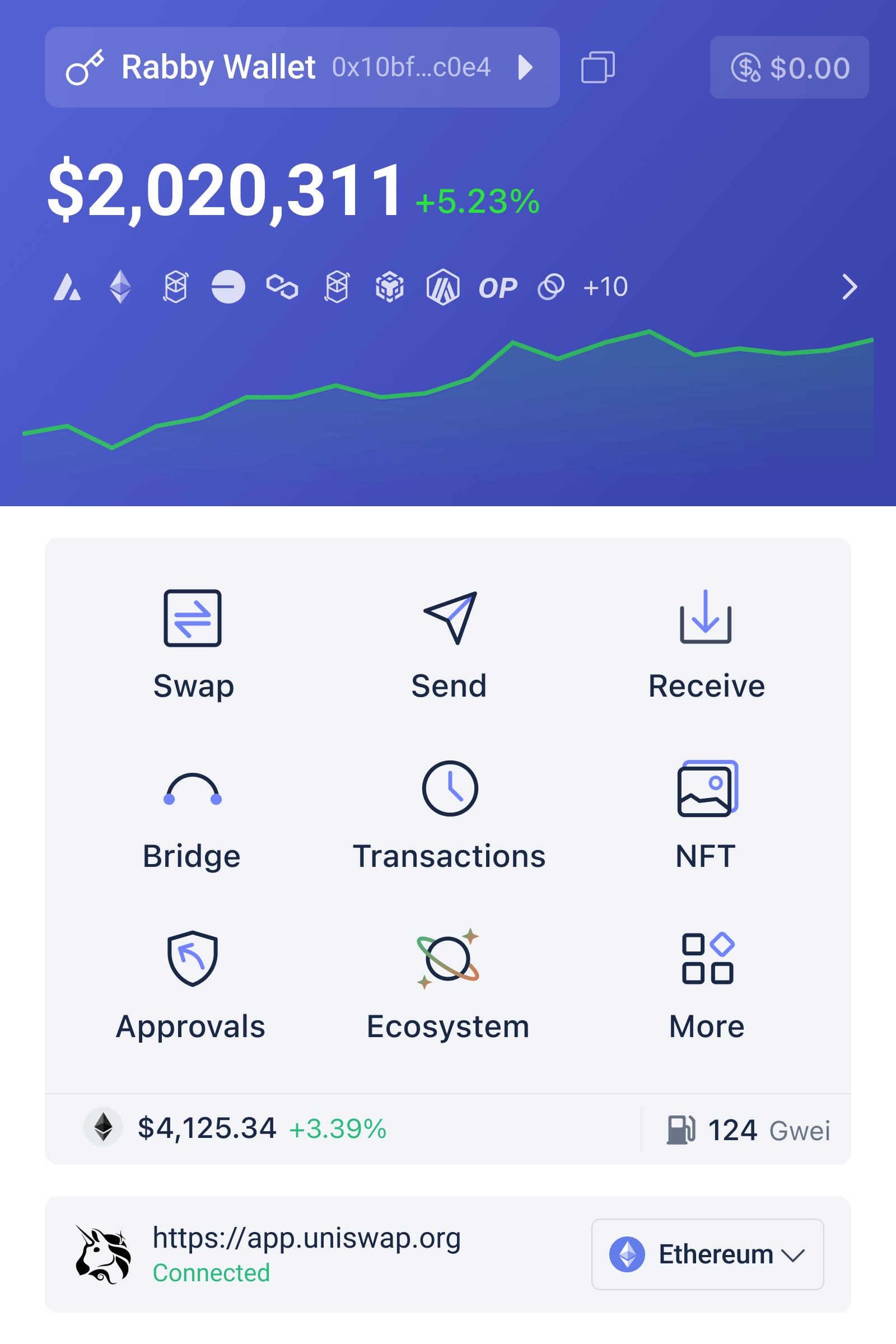
That is the practical context for a Rabby extension download. Rabby is a browser-based, multi-chain cryptocurrency wallet designed to sit between decentralized applications and the user’s signing decision. Its value is not simply that it stores assets or connects to networks. The more important question is whether a wallet can make transaction risk more legible before an irreversible action takes place.
Myth: a multi-chain wallet makes DeFi automatically safer
Reality is more specific. A multi-chain wallet can reduce friction when users move among Ethereum-compatible networks and other supported ecosystems, but convenience and safety are not the same thing. Every additional chain, bridge, decentralized exchange, lending protocol, and token approval creates another set of assumptions to verify.
Rabby’s browser extension is useful because it places wallet activity close to the applications where DeFi users work. After obtaining the extension from a trusted source, installation normally involves creating a new wallet or importing an existing one, setting a password for local access, and confirming the recovery phrase. That recovery phrase is the root of control: anyone who obtains it may be able to move the wallet’s assets, while losing it can make recovery impossible.
For users in the United States, the operational details matter. Browser extensions are exposed to phishing pages, malicious advertisements, fake support accounts, and impersonated download sites. A search result that looks official is not proof of authenticity. Before installing, check the domain, the publisher information, the extension permissions, and whether the wallet is being obtained through a trusted official distribution channel. If a page asks for a recovery phrase before the wallet has been created or restored, treat that as a serious warning.
Readers who need a starting point for the here process should still verify the source independently and read every installation prompt. A guide can explain the workflow, but it cannot certify that every link, popup, or support message encountered later is legitimate.
The important mechanism: transaction visibility before signature
Many wallet users think of a wallet as a key container. That description is technically useful but incomplete. In DeFi, a wallet is also a transaction interpreter. It receives a request from a decentralized application, presents information about the intended action, and asks the user to authorize it with a private key.
The difficult part is that smart-contract transactions are often expressed in technical data rather than plain language. A request may call a contract, transfer a token, set an allowance, or authorize another address to act on the user’s behalf. An allowance is particularly important: it can permit a contract to spend a specified amount of a token later, sometimes without another immediate confirmation for each transfer.
A security-oriented wallet can improve this moment by simulating or analyzing a proposed transaction, displaying likely asset changes, flagging suspicious contract behavior, and making network context clearer. That can help a user distinguish a normal token swap from a request that unexpectedly grants broad spending permission. The benefit is not magic detection. It is better information at the point where the user still has the ability to reject the transaction.
This leads to a sharper mental model: wallet security is partly a key-management problem and partly an interpretation problem. Keeping a recovery phrase offline protects the credential. Reviewing the transaction protects the decision. Neither substitute is complete without the other.
Myth: a warning means the transaction is definitely a scam
Risk alerts are signals, not court judgments. A wallet may flag a new contract because there is limited history, because a simulation is inconclusive, or because the interaction resembles a pattern associated with abuse. Conversely, a transaction that produces no warning can still be dangerous if the website has been compromised, the user is on the wrong network, or the contract behaves differently under conditions the simulation did not capture.
Simulation itself has boundaries. Blockchain execution can depend on changing balances, block conditions, oracle prices, permissions, and interactions across multiple contracts. A preview is therefore evidence about a proposed state transition, not a guarantee about every future outcome. Users should be especially cautious with transactions involving bridges, leveraged positions, unfamiliar tokens, complex approvals, or unusually high slippage.
There is also a human limitation. When a user is chasing a rapidly moving yield opportunity, even a clear warning may be ignored. Interface design can reduce confusion, but it cannot remove urgency, overconfidence, or the temptation to approve a transaction simply because a prominent button is available. Security features are strongest when they support a deliberate process rather than replace it.
A practical security framework for Rabby users
Before connecting the extension to a DeFi application, identify the network, the application domain, and the wallet account being used. A familiar protocol on the wrong chain is still the wrong interaction. Keep a separate wallet for experimentation or low-value activity, and avoid storing all long-term holdings in the account used for routine token claims and protocol testing.
When a transaction appears, ask three questions. What asset is leaving? What asset or position should be received? What continuing permission is being granted? The third question is frequently missed because users focus on the immediate swap. Token approvals can remain active after the original trade, so periodically review and revoke permissions that are no longer necessary. Revocation itself requires a transaction and network fee, but it can reduce the number of contracts authorized to interact with an account.
Hardware wallets can add another layer by keeping signing keys in a dedicated device, although they do not make a malicious transaction harmless. If the user confirms a harmful request on the hardware device, the device may faithfully authorize it. Similarly, multiple accounts can limit exposure, but only if funds are actually separated and the user understands which account is connected.
A useful rule is to match the strength of the control to the value and complexity of the activity. A small experimental position may justify a standard browser wallet with careful review. Larger holdings, recurring DeFi operations, or treasury-like activity may justify hardware-backed signing, strict account separation, and a slower approval process. There is no single setup that is optimal for every user; stronger controls generally add cost, friction, and operational complexity.
What to watch as multi-chain wallets evolve
There is no recent project-specific news available in the supplied weekly context, so the useful focus is on the broader direction of wallet design rather than an unverified product announcement. The likely pressure point is not merely supporting more chains. It is making cross-chain activity understandable when addresses, fee assets, bridging steps, and contract permissions differ across networks.
If wallets can reliably explain not only what a transaction does now but also what authority it creates later, users may make fewer approval mistakes. If interfaces add more chains without improving context, the opposite scenario is plausible: users gain convenience while losing the ability to recognize which network and contract they are authorizing. The signal to monitor is therefore quality of explanation, not the raw number of supported networks.
For a DeFi user, the best reason to download and install a Rabby browser extension is not the promise of effortless safety. It is the possibility of making a complicated signing environment more inspectable. That advantage depends on obtaining the software from a legitimate source, protecting the recovery phrase, reviewing simulations critically, and treating warnings as prompts for investigation. The wallet can improve the decision surface; the final risk decision remains yours.
Frequently asked questions
Is Rabby a multi-chain wallet?
Rabby is designed to support interactions across multiple blockchain networks, particularly those used by DeFi applications. Support for a network does not mean every token, bridge, or application on that network is safe. Confirm network compatibility and review each contract interaction separately.
What is the safest way to install a Rabby browser extension?
Use a trusted official distribution path, verify the domain and publisher, inspect requested permissions, and avoid links sent through unsolicited messages or social media replies. Never disclose a recovery phrase to install an extension or obtain customer support.
Can a wallet simulation guarantee that a DeFi transaction is safe?
No. A simulation can reveal expected changes and identify some suspicious behavior, but it is not a universal guarantee. Contract state, market conditions, oracle data, approval scope, and website integrity can all affect risk. Treat the preview as an important input to your decision, not as a substitute for judgment.
- PHƯƠNG ÁN XỬ LÝ NƯỚC THẢI CHẾ BIẾN TINH BỘT MÌ CÔNG NGHỆ CAO
- Il Mondo delle Licenze di Casinò Online – Come la Malta Gaming Authority Influenza le Culture del Gioco
- Unmasking Roulette Tactics – Which Modern Strategies Stand Up to the Odds?
- ỨNG DỤNG PHƯƠNG PHÁP PEROXONE – OXY HÓA BẬC CAO TRONG XỬ LÝ NƯỚC THẢI
- Xử lý nước thải khu dân cư